Zero to production
6–12 weeksA product or a v1, built end to end and deployed. For founders without a CTO, and for companies opening a new line without standing up a team first.
“You have an idea and a budget, and no one to build it.”
Not a prototype that dies in a folder. A product that's live.
Most people spend three months and a five-figure invoice to find out their idea needed changing. You'll find that out this week, for a small fixed price, holding the thing in your hand.

And, more usefully, what it isn't. This is the discovery part — except it takes two days, not three weeks, and it ends in a decision instead of a deck.
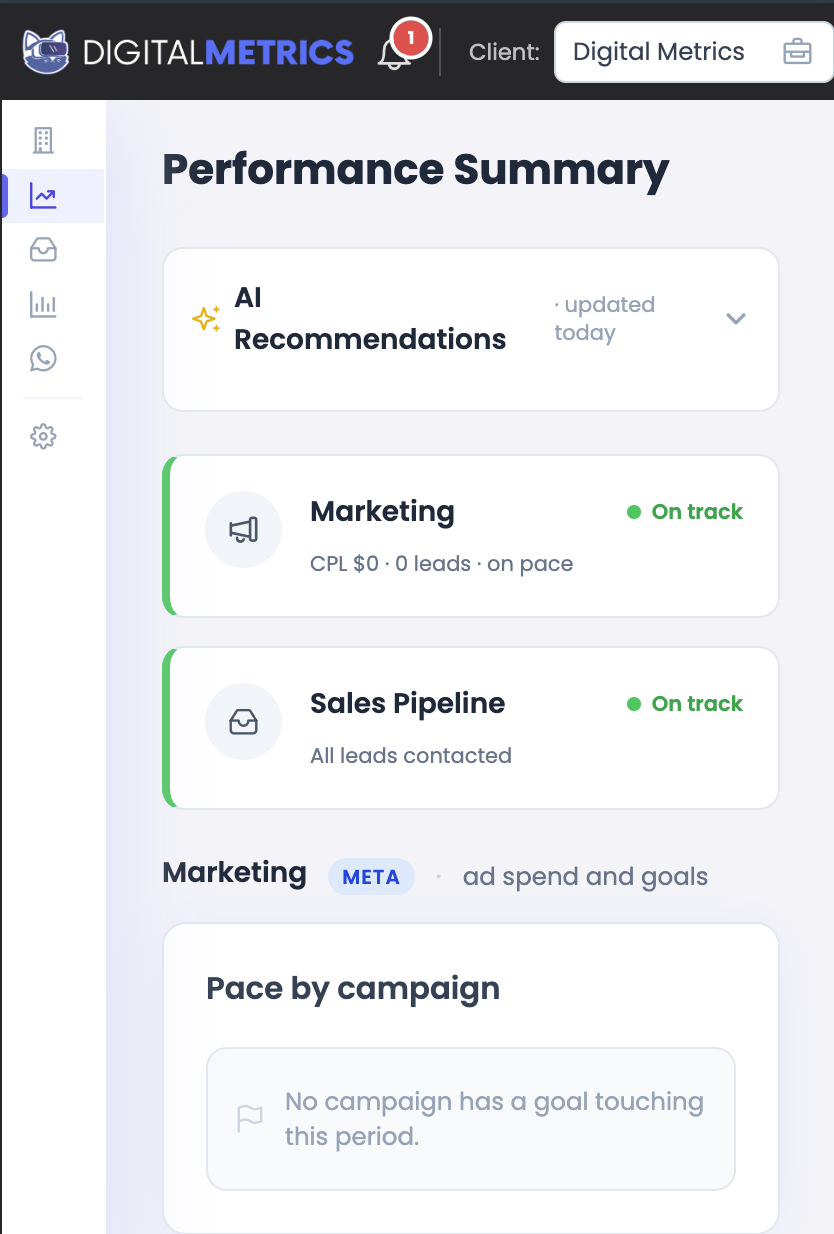
Real screens. You press them, you tell me what's wrong, I change it that afternoon. We run that loop until it matches what you actually meant.
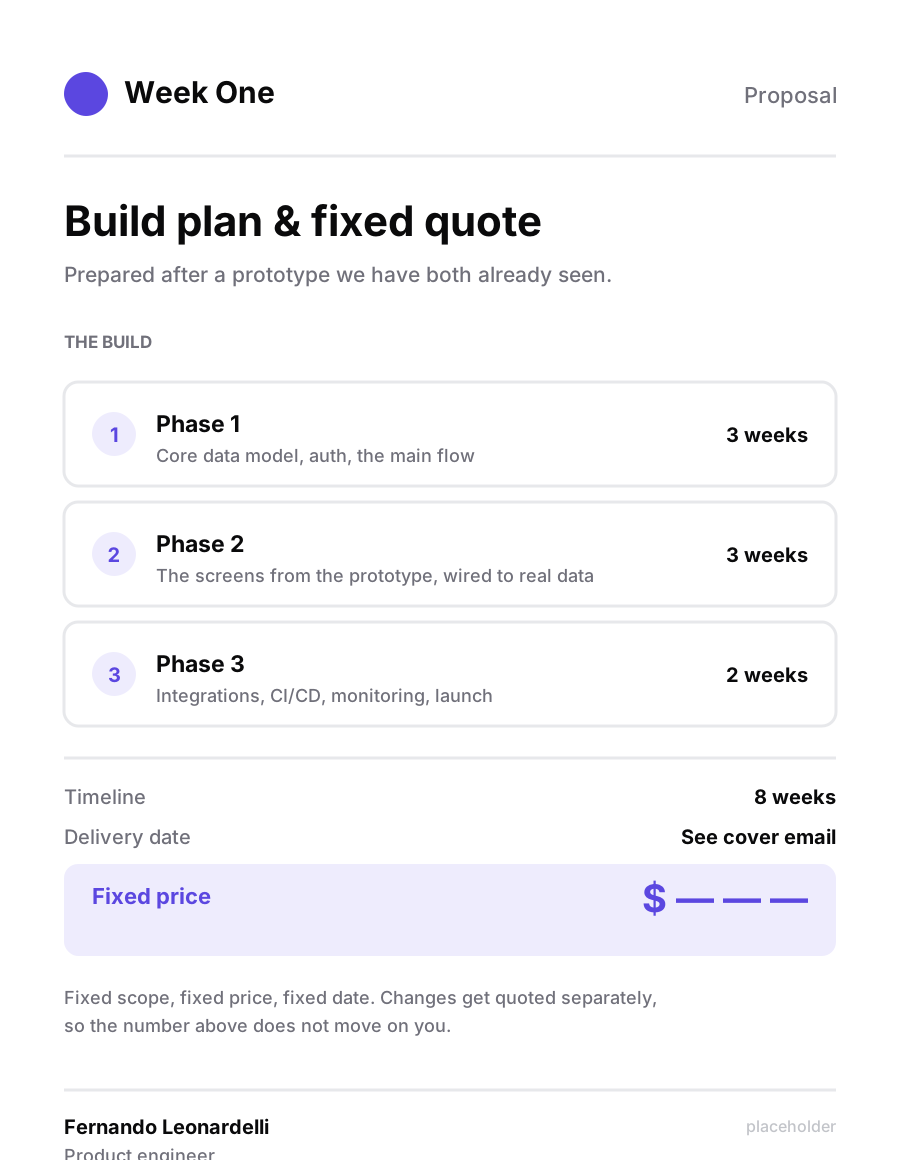
Architecture, the build split into phases, and a fixed quote with a delivery date — priced against a prototype we have both already seen.
Nobody does. Not you, not me, not the client who signed off on the spec. But put a real screen in front of you and you'll know in ten seconds what's wrong with it — and it'll be fixed before Friday. That's the whole trick, and it's why the number I give you is one I can actually hold.
Worst case, you lose five days and a small fee.
And you still walk out with the prototype, the architecture and the quote. They're yours whether you hire me for the build or take them somewhere else.
Two slots a month. No retainer, no lock-in.
A product built from nothing, a platform under extreme growth, and a large system someone else wrote. I shipped in all three.
A whole SaaS platform, built and run by one engineer.
From 20,000 to 5 million users, without stopping the business.
Walking into someone else's codebase at e-commerce scale.
Also: Luxion / KeyShot (subscriptions portal, Salesforce and HubSpot integrations, Scrum Master for a team that grew from 2 to 10 in five months), the Argentinian Ministry of Production, and 30+ client sites as co-founder of a digital agency.
Anyone can go fast once and leave a mess. The reason I can deliver a product in weeks and still hand you something your next engineer can work in is the harness around the work — not the typing speed.
Before a line of code, the boundaries are decided: what's a module, what talks to what, where this breaks at ten times the load. I've migrated a monolith serving five million users — I design for what breaks at scale before it happens.
Features get written as BDD scenarios before implementation. That's the contract: the spec is executable, so "done" isn't an opinion.
I run a two-stage workflow — architecture and instructions in one model, implementation handed to another. It writes a lot of the code. It does not make the decisions.
Generated code without tests is a liability with good formatting. TDD is what makes the speed safe, and it's why the codebase is still maintainable when I hand it over.
CI/CD, staging that mirrors prod, observability, error tracking. Not "it works on my machine" — deployed, monitored, and someone answers the phone afterwards.
Every one of them starts the same way — with Week One, so you see something real before you commit to anything.
A product or a v1, built end to end and deployed. For founders without a CTO, and for companies opening a new line without standing up a team first.
“You have an idea and a budget, and no one to build it.”
Someone else built it. It's slow, it breaks, nothing has shipped in months. I come in, stabilise it, and make delivery predictable again — then leave you something your team can work in.
“You already paid for this once.”
Legacy that's cracking under growth, migrated in phases without stopping the business. I've taken a platform from 20k to 5M users mid-flight — this is the work I know best.
“It worked fine until it didn't.”
I set your team up to build with AI the way I do: architecture decided up front, specs as BDD, tests as guardrails, senior review on every line. Speed you can keep, not a demo.
“Your team is using AI and the codebase is getting worse.”
I join your team as the senior who unblocks people, settles architecture and raises the floor. Certified Scrum Master — I use process to clear the way, not to slow things down.
“You need the person, not the project.”
Thirteen years means most of it is something I've already done once. Tell me the problem and I'll tell you honestly whether I'm the right person for it.
I'm Fernando. I've been building software for thirteen years — government systems in Buenos Aires, e-commerce in the Nordics, fintech in the UK, and for the last couple of years a SaaS platform of my own that I designed, built, shipped and still operate.
That last one is the part that matters here. I'm not an engineer who's been handed tickets for a decade. I've had to decide what to build, argue about who it's for, price it, and then go and make it exist. It means I'm as comfortable talking to you about what you actually need as I am writing the code that ships it.
Hiring one person is a trade. You lose the depth of a studio. You gain the thing a studio can't give you: no account manager, no handover between four people, no telephone game between what you said and what gets built. You talk to the person writing the code.
[ your photo goes here ]
public/fernando.jpg — look at the camera, no stock photos
Tell me what you're trying to build, or what's stuck. I'll tell you what it would take to get it live, what I'd build first, and whether I'm the right person for it. If I'm not, I'll say so.
Currently taking two Week One slots a month.